
Published On: 07/14/20 7:06 PM
Deuce Drone announced a test of their last mile delivery system which is intended to make delivery directly from stores to consumers faster and more affordable. Rouses Market, which operates 64 grocery stores in the south, has partnered with Deuce Drone to test a same day delivery system by drones in order to make last mile delivery faster and less costly than vans, so they can compete with Amazon.
Read more at:
https://www.supermarketnews.com/online-retail/rouses-markets-pilot-drone-delivery-groceries
(Image courtesy of: Commercial Drone Professional of Deuce Drone)

The US Air Force uses one of the largest aircraft in the world for intercontinental transport of massive pieces of military equipment such as jet fighters, helicopters, tanks and trailers. The only aircraft that rivals the Galaxy’s airlift capacity is the Russian Antonov which is chartered out for civilian transport of oversize cargo that cannot fit on conventional freighter aircraft. Although the Antonov carries more cargo, the Galaxy has more modern avionics and aerial refueling capacity.








(Photos from @aero.sonicboom on Instagram)

Civil drone operators are currently restricted to line-of-sight operation of one drone at a time to avoid collisions. Satellite operator, Inmarsat Group Holdings, has partnered with Altitude Angel LTD to operate drones over long distances safely by integrating a backup satellite connection for areas with no land-based communications . If they can prove safe operation to regulators, fleets of remotely operated drones could be deployed to transport tons of goods. Read more about this development at:
Read more about this development at:
https://www.ttnews.com/articles/satellite-firm-develops-long-distance-system-delivery-drones
(Photo Credit: Chip Chipman/Bloomberg News)

Published On: 06/18/20 8:04 PM
CBRE, the largest commercial real estate services company in the world, has published an excellent study of measures required to combat exposure to Covid-19 in the workplace. The study includes detailed graphics explaining how furniture and layouts can be reconfigured in the short, medium and long term.
Read the full report at:
https://irp-cdn.multiscreensite.com/e894f327/files/uploaded/Future%20of%20Furniture%20post%20COVID%2019_CBRE%20Furniture%20Advisory.pdf

According to property consultant, DeVono Cresa, demand for office space in London dropped by 30% in the first quarter, fueled by virus and Brexit fears. Global financial institutions and serviced office proprietors are leasing less space worldwide in the wake of the pandemic. Although some businesses are cutting costs in the short term by migrating to the serviced office business model, many firms are reconfiguring their existing furniture layout and adding dividers or screens to adhere to social distancing guidelines in the medium term. In the long term, a major redesign of the workplace will be necessary to adapt to a new reality and changing business practices.
Read more about this trend at:
https://workplaceinsight.net/demand-for-london-office-space-plummets-but-will-bounce-back-to-an-extent/

Published On: 05/19/20 6:02 PM
We are losing the oldest species on earth at the rate of 7 billion trees per year. Flash Forest came up with a drone technology that can transport and plant up to 20,000 seed pods per day and access sites that human planters cannot reach. The drones transport the pods and plant them faster and at a lower cost than humans with trucks and shovels. It won’t stop deforestation but it will slow climate change and narrow the gap in the race to restore the planet’s breathing mechanism.
Read more at:
(Photo credit: Flash Forest: One of Flash Forest’s prototype drones. )

NASA has signed a space act agreement with Virgin Galactic and its subsidiary, The Spaceship Company, to develop high-Mach aircraft for potential use in the commercial aviation industry. The team will apply their combined know-how and advances in sub-orbital and space travel to explore new solutions for supersonic flight. The potential for a paradigm shift in high speed passenger and cargo transport is enormous.
Read more at:
https://www.space.com/virgin-galactic-nasa-superfast-flight.html
(Photo: Virgin Galactic’s VSS Unity performs its first glide flight over Spaceport America in New Mexico on May 1, 2020. Image: © Virgin Galactic)
Published On: 05/1/20 6:43 PM
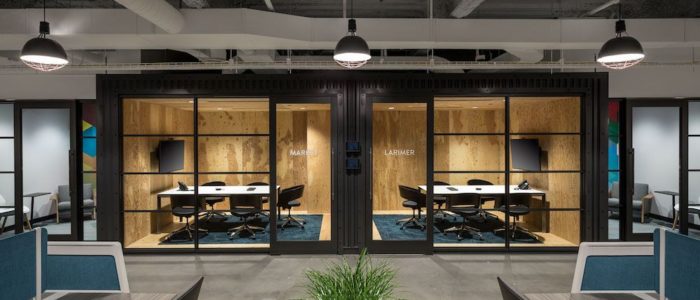
The workplace has evolved from an emphasis on private office suites, to open-plan workstations, to free-flowing collaborative open spaces. In the post-pandemic universe, we are likely to see a return to private spaces with micro private offices, larger workstations with barriers to transmission, fewer large conference rooms, elimination of small huddle spaces and a new functional style integrating tech-based solutions with social distancing and enhanced digital interaction.
Read more at:
https://www.workdesign.com/2020/04/what-people-can-expect-from-the-return-to-the-workplace/
(Photo credit: Work Design)

Published On: 04/16/20 4:54 PM
Zipline is offering to setup a drone-based supply chain across the US for distribution of emergency supplies such as medicine, PPE gear, test kits and even blood to ease supply chain blockages. The drones are launched by catapult and recovered by an arrestor system. The company has been operating the drones to deliver emergency medical supplies to remote locations in Africa for several years. Medical supplies are dropped by parachute to healthcare workers and rushed to areas suffering severe shortages.
Read more at:
https://www.aopa.org/news-and-media/all-news/2020/april/13/zipline-pitches-drones-for-us-coronavirus-relief
(Photo credit: From Zipline via AOPA: Zipline created these fixed-wing drones.)

Published On: 04/8/20 9:20 PM
Bottlenecks in the global supply chain are being bypassed by repurposing passenger aircraft for critical cargo. With retailers worldwide closing shop, warehouses becoming backed up with undelivered goods, increasing trucking restrictions and driver shortages, importers are being forced to delay delivery of goods that can’t be sold or stored. This clogs ports with containers and slows critical food and medical supply chains. Ocean carriers are rerouting containers to transshipment ports and yards close to destination so they can reach markets more quickly when business resumes, while keeping major ports unclogged. To keep food and medical supply chains flowing, critical cargo is moving on passenger aircrafts that have been idle since the travel ban.
Read more about how the ocean and air transport industries are adapting to the crisis at:
https://www.joc.com/air-cargo/idle-passenger-planes-take-mini-freighter-roles_20200317.html
(Photo credit: IAPH/International Association of Ports and Harbors)