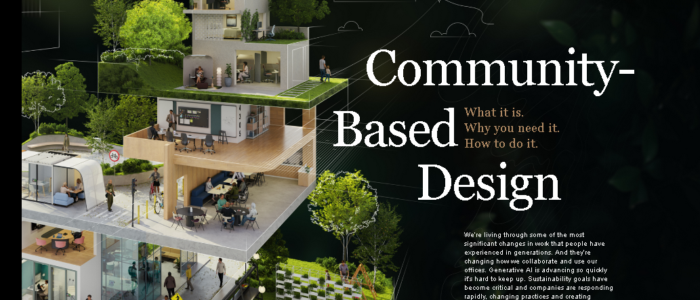
The future of office workspace will rely on community-based design according to Steelcase
Steelcase explores designing offices like thriving communities as the solution to meeting the challenges of the evolution of work:
“The parallels between neighborhoods and offices are striking. Who, after all, has a direct interest in creating diverse, vital spaces that foster creativity and serendipity? Employers do.”
– Malcolm Gladwell, Designs for Working, The New Yorker, December 2000
The article makes a number of good points highlighting the need for both private and shared workspaces that foster focus and engagement, much like thoughtfully designed communities. It emphasizes flexible, people-centered layouts that support various work styles and help employees feel connected and productive.
Once you’ve envisioned how you want your workspace to look and feel, we’ll be happy to assist in global shipping and installation of all the necessary equipment and furnishings. In fact, that’s our specialty.
Read more about the concept of community-based office design at the following link: “Community-Based Design: What it is. Why you need it. How to do it.”
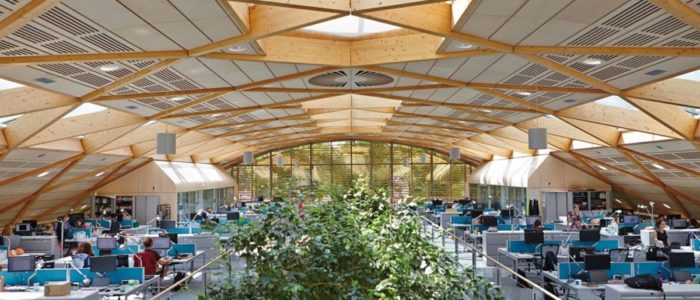
In The Future The Workplaces That Will Attract The Best Talent Will Be Circular
Environmental sustainability in the context of the workplace involves such measures as using sustainably sourced paper, as well as recycling paper and even selecting sustainable furniture for long term use. To minimize the impact on the environment, and attract socially conscious workers, the office of the future will not include inexpensive, low-quality furniture that won’t last and cannot be easily refurbished. Investing in high quality product makes the furniture last longer and reduces waste. If the product outlives the business, it still retains some resale value and is more likely to be repaired and reused than scrapped. Rather than disposing of outdated IT equipment, hard dives can be wiped clean and reprogrammed for reuse. Using sustainable resources to create adaptable, modular workspaces which can be reconfigured for future growth and changing needs is a strategy that will be cost-effective while meeting the standards of a new generation of environmentally conscious workers. Read more about the circular future of the workplace here.