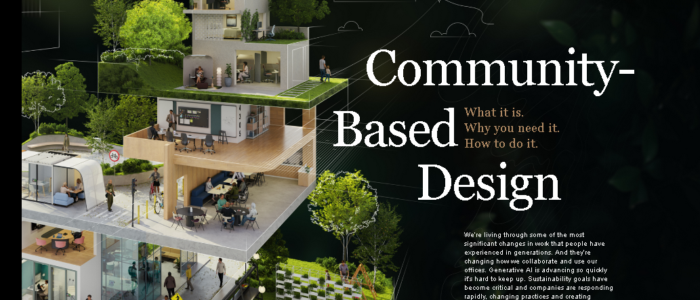
The future of office workspace will rely on community-based design according to Steelcase
Steelcase explores designing offices like thriving communities as the solution to meeting the challenges of the evolution of work:
“The parallels between neighborhoods and offices are striking. Who, after all, has a direct interest in creating diverse, vital spaces that foster creativity and serendipity? Employers do.”
– Malcolm Gladwell, Designs for Working, The New Yorker, December 2000
The article makes a number of good points highlighting the need for both private and shared workspaces that foster focus and engagement, much like thoughtfully designed communities. It emphasizes flexible, people-centered layouts that support various work styles and help employees feel connected and productive.
Once you’ve envisioned how you want your workspace to look and feel, we’ll be happy to assist in global shipping and installation of all the necessary equipment and furnishings. In fact, that’s our specialty.
Read more about the concept of community-based office design at the following link: “Community-Based Design: What it is. Why you need it. How to do it.”
Generational Shifts in the Evolution of Workplace Design
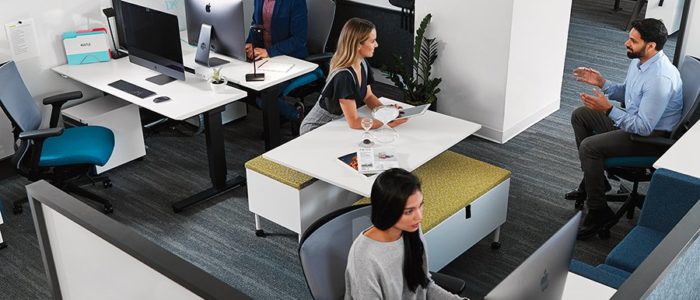
According to KI, a manufacturer of office furniture, the modern workplace must address the needs of the 4 generations currently active in the workplace. While baby boomers are accustomed to private offices and personal workstations, the dawn of the digital age has been adopted by Gen X, Millenial and Gen Z employees to varying degrees, resulting in the need for more flexible workspaces.
Read more about how KI addresses the adaptability that must be incorporated into the modern workspace at:
https://blog.ki.com/designing-a-flexible-workplace-for-all-generations
(Photo from: blog.ki.com)
Agile Workspaces Promote Collaboration, Creativity, Innovation And Problem Solving
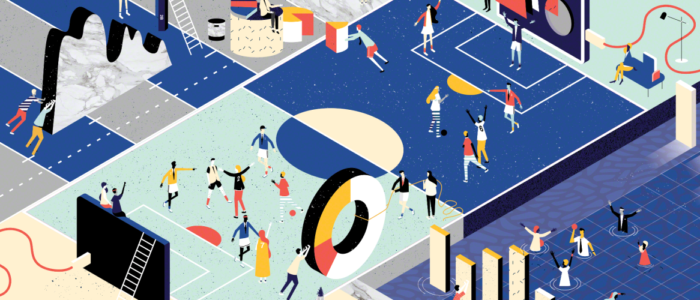
According to research conducted by Steelcase, a trend is emerging in which companies focus on building agile workspaces for collaborative teams to solve complex problems and accelerate their response to market demand for innovation. The space needs to be dynamic and adaptable to changing tasks and promote face to face interaction between team members, rather than relying on slower, impersonal digital discussion. The space must provide areas for teams to display and share ideas, as well as private areas for tasks requiring concentration without disruption. Research shows that the linear workspaces of the past have not been conducive to creating a balance between collaborative teamwork and personal space. Read more about this trend at:
https://www.steelcase.com/eu-en/research/articles/new-work-new-rules/